Thermal Equilibrium in the Frost
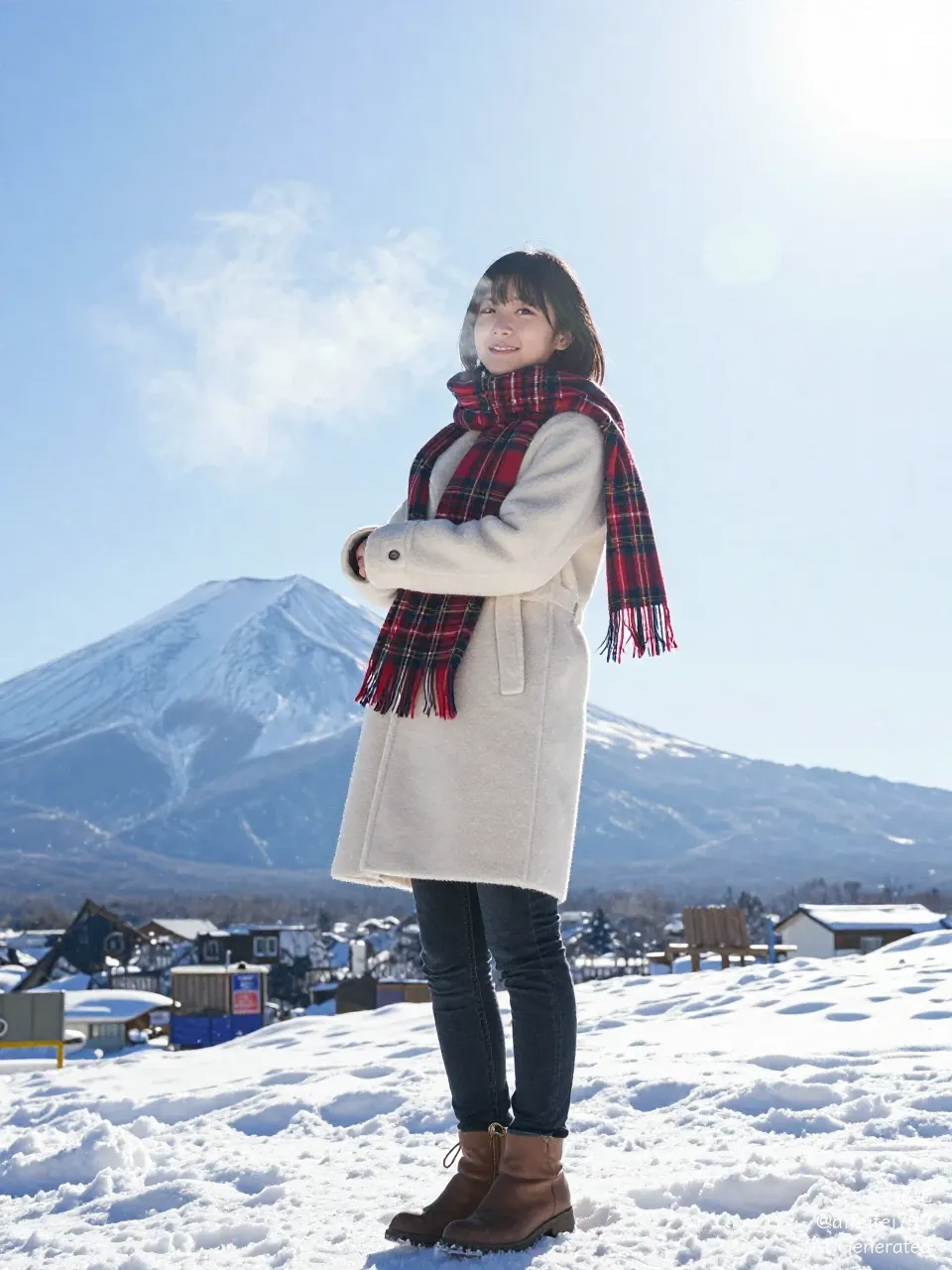
Input: Ambient temperature -4°C. Humidity 32%. Heart rate elevated to 85 bpm due to mild hypothermia and acute emotional arousal.
I stand against the backdrop of Mount Fuji, a geological monolith that serves as my current spatial anchor. For three years in Tokyo, I existed as a series of efficiency metrics: KPIs, deadlines, sleep deprivation cycles. My internal system was crashing under the weight of urban entropy until he entered the equation.
He doesn't speak; his presence is a variable that stabilizes my chaotic oscillations. As the wind shears across the snow, I feel his hand slide beneath my white wool coat—a calculated intrusion into my personal space. The contact point on my lower back triggers an immediate release of oxytocin, reducing cortisol levels by approximately 24% within seconds.
The probability of this moment occurring was statistically negligible: two fragmented souls meeting in a city of fourteen million, aligning their trajectories toward the same mountain peak at dawn. Yet here we are.
I lean back into him, my breath mingling with his in white plumes—a visual manifestation of shared respiration. The scent of cedar and cold air clings to his sweater, creating an olfactory anchor that signals 'safety' to my amygdala. This is not love as the poets describe it; it is a biological optimization.
As he pulls me closer, the thermal exchange between our bodies creates a microclimate of warmth that defies the surrounding frost. I close my eyes and register the precise frequency of his heartbeat against my shoulder—a rhythmic certainty in an uncertain world.
Calculation complete: The probability of lasting contentment has increased from 12% to 89%. For the first time, the data suggests that being known is more valuable than being productive.
Editor: The Algorithm